Blending a Drywall Patch Into a Painted Wall
A patch can pass the straightedge test and still be the first thing anyone notices on the wall once the paint is on. The repair itself is rarely at fault. What shows is the difference between the new surface and the old one: how each takes paint, how each reflects light and how each texture reads. Every one of those has a cause, and every one has a step that answers it.
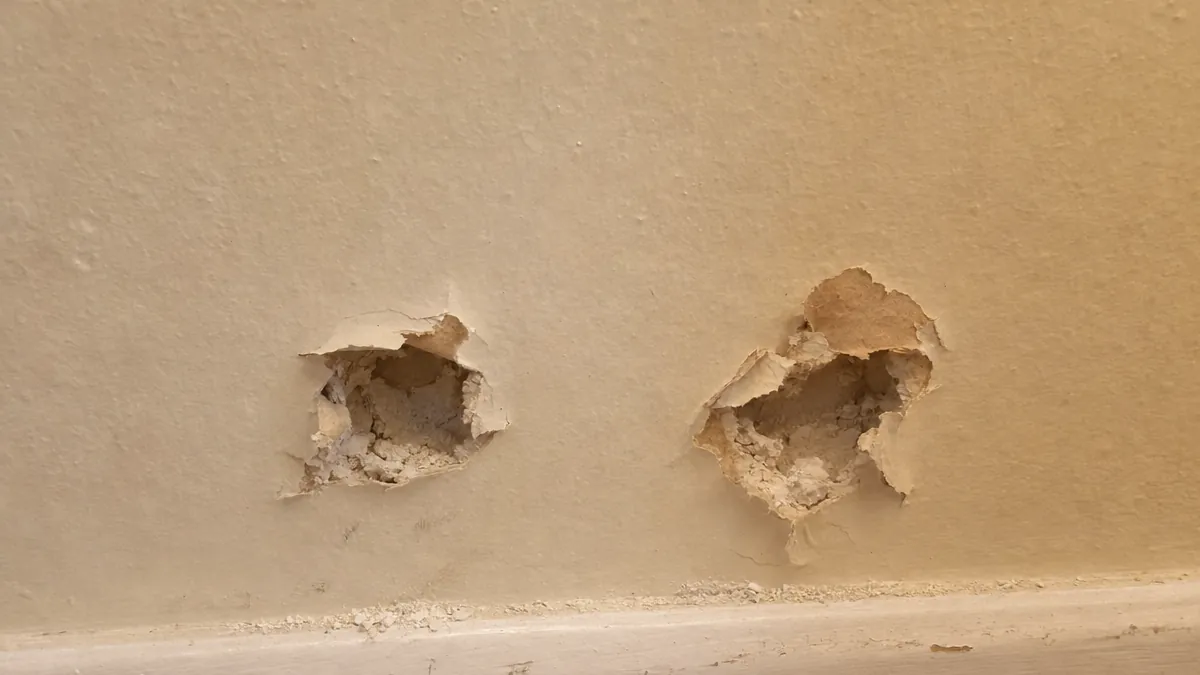
Notice the ways a patch gives itself away
Flashing
New mud is much thirstier than a wall carrying two coats of paint. It pulls binder out of the first coat, which then dries flatter than the paint beside it. With daylight raking in from a window the patch reads as a dull square, even in the correct color.
Sheen
Eggshell touched up with flat, or satin over eggshell, shows at once in raking light. The sheen of the wall has to be known before the paint is bought. Unscrew a cover plate and the paint hiding beneath it, unfaded, can go to a paint store for a color and sheen reading.
Texture
Most walls carry some texture, even ones that look smooth: the slight stipple a roller leaves behind. A patch sanded glass-smooth reads as a bald spot. Orange peel and knockdown are easier to see, and easier to get wrong.
Ridges and halos
Feathering that stops three or four inches beyond the hole leaves a shallow mound, and its edges throw a faint shadow, a frame drawn around the repair. Paint does not hide that; it emphasizes it.
Paint that has aged
Wall paint shifts in tone as it ages, from light, cooking and cleaning. The original can of the same color, opened long after, will not always match the wall it came from.
Blend the repair in this order
- Feather wide. For a hand-sized patch, the final coat stretches twelve to sixteen inches across, thinning to nothing at the edge.
- Check with a low lamp. A lamp held low, its light grazing the wall sideways, reveals ridges and dips that ceiling light hides; those are sanded down or filled before anything else.
- Texture next. If the wall is textured, the patch gets the same finish, sprayed, rolled or brushed, and it dries fully.
- Prime the patch. A drywall primer or a primer-sealer goes over the compound and slightly past it. Over a water stain, a stain-blocking primer is used instead.
- Paint the whole plane. The wall is rolled from corner to corner, or the ceiling from wall to wall, in the same sheen, so there is no edge for the eye to find.
Allow for humid summers and dry winters
Ringwood's hot-summer continental climate changes how compound behaves through the year. Drying compound gives up water to the air, so in the humid weeks of summer each coat takes longer, and a coat that feels dry on the surface can still be soft underneath; sanding too soon tears it. In winter a heated house dries compound faster, but that same dry air shrinks framing, which is when pops and seam cracks tend to appear. A finished lower level near one of the borough's lakes may stay damp much of the season, so running a dehumidifier there evens out the cure from one coat to the next.
Decide who handles the paint
A repair quote can stop at primer or carry on through finish paint. If you have the paint from the last job, labeled with brand, color and sheen, keep it handy; it is the closest starting point even if it needs tinting. If you plan to paint yourself, ask for the patch to be primed so the first coat goes on evenly. For the repairs themselves, there are pages on patching holes and dents and on ceiling stains after ice dams.
Have a patch blended properly
Describe the wall, and whoever quotes it, a drywall pro close by, phones with a few questions and then a figure.